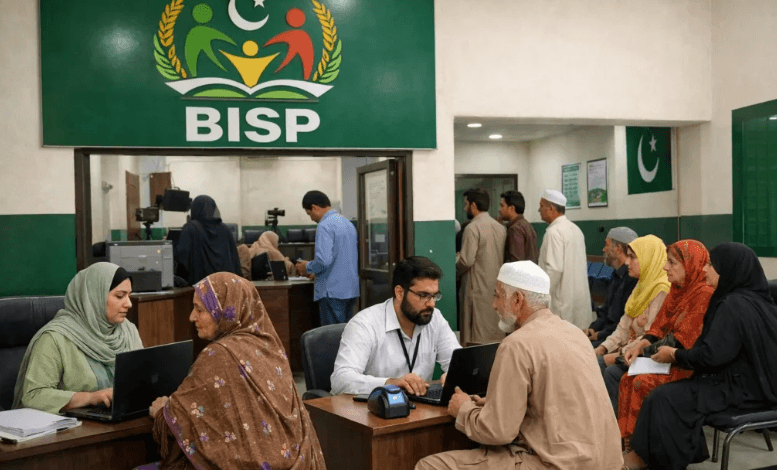
The Benazir Income Support Programme (BISP) is one of Pakistan’s largest social safety net initiatives, designed to provide financial assistance to low-income and vulnerable families. It aims to reduce poverty, improve household stability, and support families struggling with rising living costs. The registration system is structured to ensure that only deserving families are included through a transparent and data-driven process.
Understanding the Purpose of BISP Registration
The main goal of the BISP registration system is to identify families that fall below the poverty threshold. Instead of random selection, the program uses a structured database and survey system to evaluate household income, living conditions, and overall financial status. This helps the government distribute aid fairly and efficiently.
Families that qualify receive financial assistance either on a monthly or quarterly basis, depending on program updates and eligibility criteria.
Step 1: National Socio-Economic Registry (NSER) Survey
The registration process begins with the NSER survey, which is the backbone of BISP. Field teams visit households and collect detailed information, including:
- Family size
- Monthly income
- Employment status
- Housing conditions
- Utility usage
- Education level of children
This data is then entered into a centralized system that calculates a poverty score for each household.
Step 2: Data Verification and Scoring
Once the survey is completed, the information is verified using government databases. The system cross-checks identity details through CNIC records and other national databases to ensure accuracy.
Each household is assigned a poverty score. Families with scores below a certain threshold are considered eligible for financial assistance.
At this stage, many applicants also try tools like bisp registration check by cnic, which allows them to confirm whether their CNIC is registered and whether they qualify for assistance.
Step 3: Eligibility Confirmation
After verification, eligible families are officially added to the BISP beneficiary list. They are then informed through SMS alerts or local BISP offices. Families that do not qualify are usually informed about the reason, such as income level or incomplete data.
If a family believes they were wrongly excluded, they can request a re-survey or update their information at designated BISP centers.
Step 4: Registration Through BISP Centers
In addition to surveys, families can also visit BISP registration centers. At these centers:
- CNIC is verified through NADRA systems
- Household data is updated or corrected
- Complaints and appeals are recorded
- New applications are processed if required
This ensures that families who were missed during the NSER survey still have a chance to register.
Step 5: Payment Distribution System
Once registered and approved, beneficiaries start receiving financial support. Payments are distributed through:
- Designated bank branches
- ATM cards (in some programs)
- BISP payment centers
- Authorized retail agents
The system is designed to reduce corruption and ensure direct transfer of funds to beneficiaries.
Importance of CNIC in the Registration Process
The Computerized National Identity Card (CNIC) plays a central role in the entire system. It is used to:
- Verify identity
- Prevent duplicate registrations
- Track eligibility status
- Link household data with national records
Without a valid CNIC, a person cannot be registered under BISP.
See also: From Prototype to Production: Using Low-Volume Molding for Startups
Common Issues Faced During Registration
Although the system is designed to be efficient, some families face challenges such as:
- Incorrect or outdated survey data
- Missing household information
- Delays in verification
- Ineligibility due to scoring system
To resolve these issues, applicants can update their information through BISP offices or request re-evaluation.
Final Thoughts
The BISP registration system is a structured and data-driven process aimed at supporting Pakistan’s most vulnerable families. By using surveys, CNIC verification, and centralized databases, the program ensures that financial assistance reaches those who need it most.
With increasing digital tools and CNIC-based tracking, families can now more easily confirm their status, apply for assistance, and stay updated on their eligibility, making the system more transparent and accessible than ever before.