Launching a physical hardware product is one of the most exciting yet terrifying journeys for a startup. In the initial phases, everything moves quickly. You design a concept, iterate on it using desktop 3D printers, and handle a few functional prototypes.
But then, you hit the infamous manufacturing valley of death: The transition from prototype to mass production.
Traditionally, traditional injection molding factories forced startups into a corner. They demanded massive upfront capital for hardened steel tooling, requiring minimum orders of 50,000+ units. For a bootstrapped startup testing a new market, this meant high financial risk.
Fortunately, modern manufacturing has evolved. Low-Volume Molding (LVM) bridges this gap, allowing startups to manufacture high-quality, retail-ready parts in manageable batches without draining their runway.
The Strategic Bridge: Why Startups Need Low-Volume Batches
Low-volume molding refers to the production of genuine, injection-molded parts in quantities ranging from 100 to 10,000 units. It is the ultimate scaling tool for modern hardware companies for several reasons:
- Preserving Crucial Runway: Instead of sinking millions of PKR into permanent factory tooling before selling a single unit, startups can keep their capital fluid for marketing, hiring, and business development.
- Real-World Market Validation: It allows you to launch a “Beta” hardware batch to early adopters, gather real-world user feedback, and refine your design before locking in millions of units.
- Speed to Market: Industrial steel molds can take months to manufacture, test, and tune. Low-volume tooling can be fabricated and deployed in a fraction of that time, letting you beat competitors to the market.
Overcoming the Tooling Financial Barrier
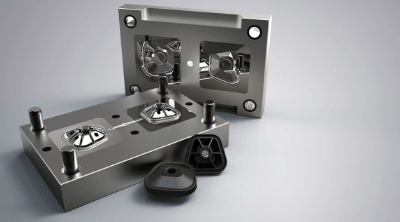
The secret to keeping small production runs affordable lies in the engineering of the mold itself. Traditional manufacturing relies on heavy tool steel that is built to survive millions of cycles. However, cutting these molds requires specialized, high-cost EDM (Electrical Discharge Machining) and multi-axis CNC setups.
To bypass this barrier, startups leverage cost-effective low-volume molding strategies. By utilizing modular mold bases, master unit dies ($MUD$ inserts), or high-grade aluminum tooling instead of hardened steel, the upfront cost drops by up to 80%.
Aluminum transfers heat much faster than steel, which optimizes cooling cycles and allows startups to achieve production-grade finishes, exact dimensional tolerances, and optimal material properties at a fraction of traditional setup costs.
[3D Printed Prototype] ➔ [Aluminum Tooling (LVM)] ➔ [Market Validation Runs] ➔ [Hardened Steel Mass Production]
Streamlining Assembly with Multi-Material Workflows
When operating with a lean team, every second spent on the manual assembly line increases your per-unit cost and introduces human error. If your product requires metal screw threads, internal wiring paths, or embedded electronic contacts, assembling them post-molding is highly inefficient.
Smart startups optimize their low-volume runs by consolidating multi-piece assemblies into a single manufacturing cycle.
Understanding the insert molding process benefits is a game-changer here. By placing a pre-formed metal or electronic component directly inside the mold cavity before injecting the resin, the plastic encapsulates the insert as it solidifies.
This creates an unbreakable mechanical bond, drastically reduces manual workshop labor, improves structural integrity, and allows startups to deliver compact, professional-grade electronics or mechanical housings effortlessly.
See also: How Automation Is Reshaping the Workforce
Startup Comparison: Prototyping vs. Low-Volume vs. Mass Production
| Parameter | Rapid Prototyping (3D Printing) | Low-Volume Molding (LVM) | Mass Production (Traditional) |
| Target Volume | 1 – 10 units | 100 – 10,000 units | 50,000+ units |
| Tooling Material | None | High-Grade Aluminum / Modular | Hardened Tool Steel |
| Upfront Tooling Cost | Zero | Low & Manageable | Extremely High |
| Per-Part Quality | Good for form/fit testing | Production-Grade (Retail Ready) | Production-Grade (Retail Ready) |
| Design Flexibility | Infinite | High (Easy tool modification) | Extremely Rigid (Altering steel is costly) |
Final Verdict: Scale Smart, Scale Lean
For a modern hardware startup, success isn’t about bragging about how many tens of thousands of units you have sitting in a warehouse; it’s about agility, capital efficiency, and minimizing time-to-market.
By leveraging low-volume molding built on aluminum tooling and incorporating smart workflows like insert molding, you protect your startup from catastrophic inventory waste. You gain the freedom to iterate based on real customer experiences, deliver flawless retail-grade hardware, and scale your business sustainably from a simple desktop prototype to a household name.