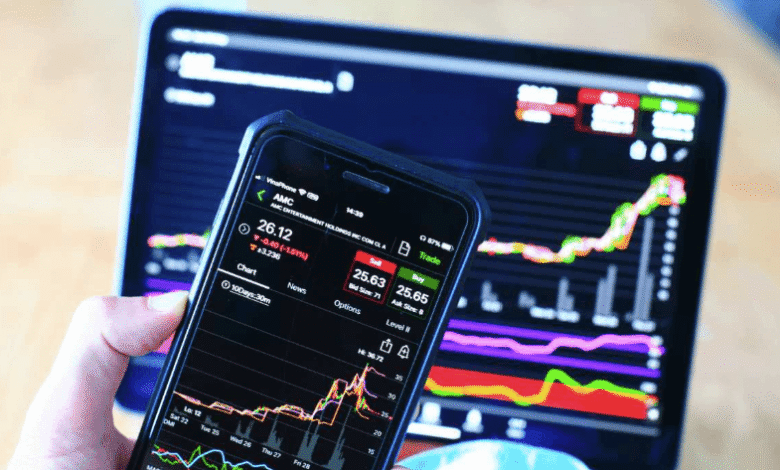
The stock market has evolved dramatically over the past decade. Where traders once relied on intuition, experience, and manual chart analysis, today’s investment landscape demands sophisticated tools and data-driven decision making. The sheer volume of market data—billions of transactions daily across thousands of securities—exceeds human processing capacity. This is where artificial intelligence fundamentally transforms how investors analyze markets, identify opportunities, and manage risk.
Modern AI-powered technical analysis tools process vast datasets instantaneously, identify patterns invisible to human analysis, and generate actionable trading signals with remarkable accuracy. For serious investors and traders looking to gain a competitive edge, understanding and leveraging AI technical analysis tools isn’t optional—it’s essential to remaining competitive in contemporary markets.
A Technical Stock Analyst powered by advanced AI combines decades of pattern recognition, real-time data processing, and machine learning algorithms to provide investment insights that give traders significant advantages.
Understanding Technical Analysis in the Modern Era
Technical analysis—the study of historical price and volume data to predict future price movements—has been practiced for over a century. Traders examine charts, recognize patterns, and interpret indicators to make trading decisions. However, traditional technical analysis suffers from significant limitations that AI directly addresses.
The Limitations of Manual Technical Analysis
Human Bias
Traditional traders operate through subjective interpretation. The same chart pattern might be interpreted differently by different analysts. Confirmation bias—seeing what we expect to see rather than what’s actually there—clouds judgment. Emotional factors during winning and losing streaks affect decision-making quality.
Limited Data Processing
Even experienced traders can realistically monitor perhaps 20-50 securities simultaneously. The stock market contains thousands of tradeable securities. Most opportunities never come to a trader’s attention simply because monitoring capacity is exhausted.
Time-Intensive Analysis
Quality technical analysis requires substantial time investment. Manually analyzing charts, calculating indicators, examining support and resistance levels, and identifying patterns consumes hours for professional traders. This time investment limits scalability and frequency of analysis.
Inconsistent Methodology
Human traders naturally apply rules inconsistently. On a good day when confidence is high, they might take more trades. On days following losses, they might become overly cautious. These inconsistencies reduce edge and introduce unnecessary variability.
Delayed Recognition
Markets move quickly. By the time a trader recognizes an emerging pattern and decides to act, optimal entry points have often passed. Manual analysis introduces inevitable delays in pattern recognition and decision-making.
How AI Technical Analysis Works
Modern AI technical analysis systems address these limitations through sophisticated technology architecture:
Data Integration and Processing
AI systems simultaneously process data from:
- Real-time price and volume feeds from multiple exchanges
- Historical price data spanning decades
- Macroeconomic indicators and news sentiment
- Institutional buying and selling patterns
- Global market correlations
- Cryptocurrency and traditional asset data
This data integration happens continuously, with systems processing millions of data points per second. What would take human traders weeks to compile and analyze, AI completes in milliseconds.
Pattern Recognition Algorithms
Advanced machine learning models trained on decades of historical price data learn which patterns reliably predict future price movements. These models identify:
Chart Patterns
- Head and shoulders formations
- Double tops and bottoms
- Triangles and wedges
- Flags and pennants
- Fibonacci retracements
- Support and resistance levels
The AI doesn’t just identify these patterns—it learns how reliable each pattern is under different market conditions. A triangle pattern might be bullish 70% of the time in strongly trending markets but only 45% of the time in choppy, sideways conditions. AI captures these conditional probabilities.
Indicator Combinations
Individual technical indicators (Moving Averages, RSI, MACD, Bollinger Bands, etc.) provide limited insight individually. AI systems examine thousands of indicator combinations, learning which combinations reliably predict directional movement, reversal points, or continuation patterns.
Regime Recognition
Market conditions change. Trending markets behave differently than range-bound markets. Volatile markets require different approaches than quiet markets. AI systems recognize market regime changes and adjust analysis accordingly.
Predictive Modeling
Rather than providing subjective opinions, AI systems generate probability-based predictions:
- Probability the price moves up versus down
- Expected magnitude of price movement
- Potential support and resistance levels
- Optimal entry and exit points
- Risk-reward ratios for specific trades
These probability estimates update continuously as new data arrives, allowing traders to adjust strategies in real-time.
Key Advantages of AI-Powered Technical Analysis
Superior Pattern Recognition
Human traders can typically hold perhaps 5-10 chart patterns in working memory simultaneously. AI systems analyze thousands of patterns simultaneously across all tradeable securities. This expanded pattern recognition identifies opportunities humans simply cannot see.
Moreover, AI identifies subtle pattern variations that predict different outcomes. What appears as a standard pattern to human analysis might actually be a rare variant that typically reverses rather than continues. AI captures these nuances.
Objective, Emotion-Free Analysis
AI applies consistent rules regardless of recent outcomes. It doesn’t get overconfident after winning trades or gun-shy after losses. This consistency enables true edge development based on statistical probability rather than emotional factors.
24/7 Market Monitoring
Global markets operate around the clock. AI systems monitor all tradeable securities across all time zones continuously. Opportunities in foreign markets at hours when traders are sleeping don’t get missed.
Risk Management Excellence
Beyond identifying opportunities, AI excels at risk assessment:
- Position sizing – Determining appropriate capital allocation based on opportunity probability and volatility
- Stop loss optimization – Setting exit points that balance protection with realistic volatility
- Portfolio correlation – Understanding how positions move together and identifying concentrated risks
- Volatility forecasting – Predicting future price movement magnitude
- Black swan identification – Flagging unusual conditions that precede major moves
Real-Time Adaptability
Markets change constantly. What worked yesterday might not work today. AI systems continuously learn from new data, adapting strategies as market conditions evolve. This adaptive approach prevents strategy decay—the common problem where profitable systems gradually stop working.
Backtesting and Optimization
Before risking capital on new trading ideas, AI systems can test strategies against decades of historical data. Backtesting reveals:
- Win rates and losing rates
- Average winning and losing trade sizes
- Maximum drawdown (peak to trough decline)
- Profit factor (total wins divided by total losses)
- Risk-adjusted returns
This historical performance guidance helps traders evaluate whether strategies have genuine edge or are simply lucky.
Types of AI Technical Analysis Tools
Standalone Analysis Platforms
Specialized trading platforms integrate AI analysis directly into charting software. These platforms provide:
- Real-time AI-generated signals
- Pattern identification across multiple timeframes
- Indicator optimization suggestions
- Backtesting capabilities
- Portfolio monitoring and alerts
Algorithmic Trading Systems
Fully automated systems execute trades based on AI analysis without human intervention. These systems:
- Execute trades with mechanical discipline
- Manage multiple positions simultaneously
- Implement complex strategies impossible to execute manually
- Remove emotion from execution
- Scale strategies across thousands of securities
Hybrid Intelligence Platforms
These systems provide AI analysis and recommendations while preserving human decision-making authority. Traders review AI suggestions, apply judgment, and then execute or modify recommendations. This approach combines AI analysis advantage with human wisdom.
Robo-Advisor Services
Automated investment services use AI to:
- Create diversified portfolios
- Automatically rebalance holdings
- Optimize tax efficiency
- Adjust risk tolerance over time
- Minimize emotional decision-making
See also: How Automation Is Reshaping the Workforce
Practical Application for Different Trader Types
Day Traders
Day traders benefit enormously from AI technical analysis through:
- Rapid pattern recognition in 1-5 minute charts
- Real-time entry and exit signal generation
- Multiple trading opportunity identification daily
- Risk management automation
AI handles the processing intensity of day trading, freeing traders to focus on execution and capital management.
Swing Traders
Swing traders holding positions for days or weeks leverage AI for:
- Intermediate-term trend identification
- Support and resistance level projection
- Entry point optimization
- Position sizing based on volatility
Position Traders
Long-term traders benefit from AI through:
- Long-term trend confirmation
- Major support and resistance identification
- Portfolio correlation analysis
- Sector and asset rotation recommendations
Options Traders
Options traders particularly benefit from AI volatility forecasting:
- Predicting future volatility to assess option value
- Identifying volatility mispricing
- Assessing probability of expiration at-the-money
- Managing Greeks and position risk
Integrating AI Analysis with Fundamental Research
The most successful investors combine AI technical analysis with fundamental research:
Fundamental Analysis answers “Should I own this?”
- Company financial health
- Competitive position
- Growth prospects
- Valuation assessment
Technical Analysis answers “When should I own this?”
- Optimal entry points
- Appropriate exit points
- Risk management levels
- Trend confirmation
Using AI technical analysis to time entries and exits of fundamentally sound investments significantly improves returns compared to fundamental analysis alone or technical analysis alone.
Risk Management with AI Systems
Avoiding Over-Reliance
AI systems should inform decisions, not make them automatically. Even sophisticated AI can be fooled by unprecedented market conditions. Human judgment, especially regarding unusual market situations, remains valuable.
Regular Strategy Review
AI systems learn from data patterns that may not persist into the future. Markets evolve. Strategies that work during trending markets may fail during choppy conditions. Regular review and adjustment prevents strategy decay.
Position Sizing Discipline
Even the most accurate AI signals can lead to losses. Proper position sizing ensures no single loss threatens overall capital. Risk management must always take priority over profit maximization.
The Future of AI Technical Analysis
The evolution continues. Future AI technical analysis will incorporate:
Multimodal Analysis
- Combining technical data with sentiment analysis
- Incorporating news and social media signals
- Integrating macroeconomic indicators automatically
- Analyzing cross-asset correlations
Deeper Learning
- More sophisticated neural networks capturing market complexity
- Better anomaly detection identifying rare but profitable patterns
- Improved volatility forecasting
- Better black swan prediction
Personalization
- AI systems learning individual trader characteristics
- Adapting recommendations to personal risk tolerance
- Matching signals to trading style and schedule
- Optimizing recommendations based on personal trade history
Building Your AI Technical Analysis Toolkit
Starting with AI technical analysis requires:
- Education – Understanding technical analysis fundamentals
- Platform Selection – Choosing appropriate tools for your trading style
- Strategy Development – Creating rule-based strategies to test
- Backtesting – Validating strategies against historical data
- Paper Trading – Testing live signals with virtual capital
- Real Trading – Starting with small position sizes
- Continuous Learning – Staying updated on market evolution and AI advances
Understanding AI Investment Intelligence
The competitive advantage in modern investing increasingly comes from sophisticated data analysis and technological advantage. As Jenova – The Future of AI That Remembers demonstrates, AI systems capable of understanding market complexity and remembering patterns across enormous datasets will increasingly dominate investment markets.
The traders who succeed in contemporary markets are those who leverage AI technical analysis tools effectively. Rather than competing with AI systems—impossible for humans—successful traders work alongside AI, combining machine intelligence with human wisdom.
Conclusion
Smart investing in the modern era requires embracing AI technical analysis tools. These sophisticated systems process market data far beyond human capacity, identify patterns with statistical reliability, and provide actionable trading signals that improve decision-making quality.
Whether you’re a day trader seeking rapid signals, a swing trader timing entries and exits, or a long-term investor seeking optimal entry points, AI technical analysis tools provide genuine advantages. The question isn’t whether to use AI analysis—successful traders increasingly do. The question is which tools best match your trading style and how to integrate them most effectively.
The future of investing belongs to traders who understand and leverage artificial intelligence. Start exploring AI technical analysis tools today. Your competitive advantage tomorrow depends on the sophistication of your analysis today.
The market doesn’t reward sentimentality or tradition. It rewards accurate prediction and disciplined execution. AI technical analysis tools provide both. The question is whether you’ll adopt them before your competitors do.